We Belong to One Another
Feb 07, 2026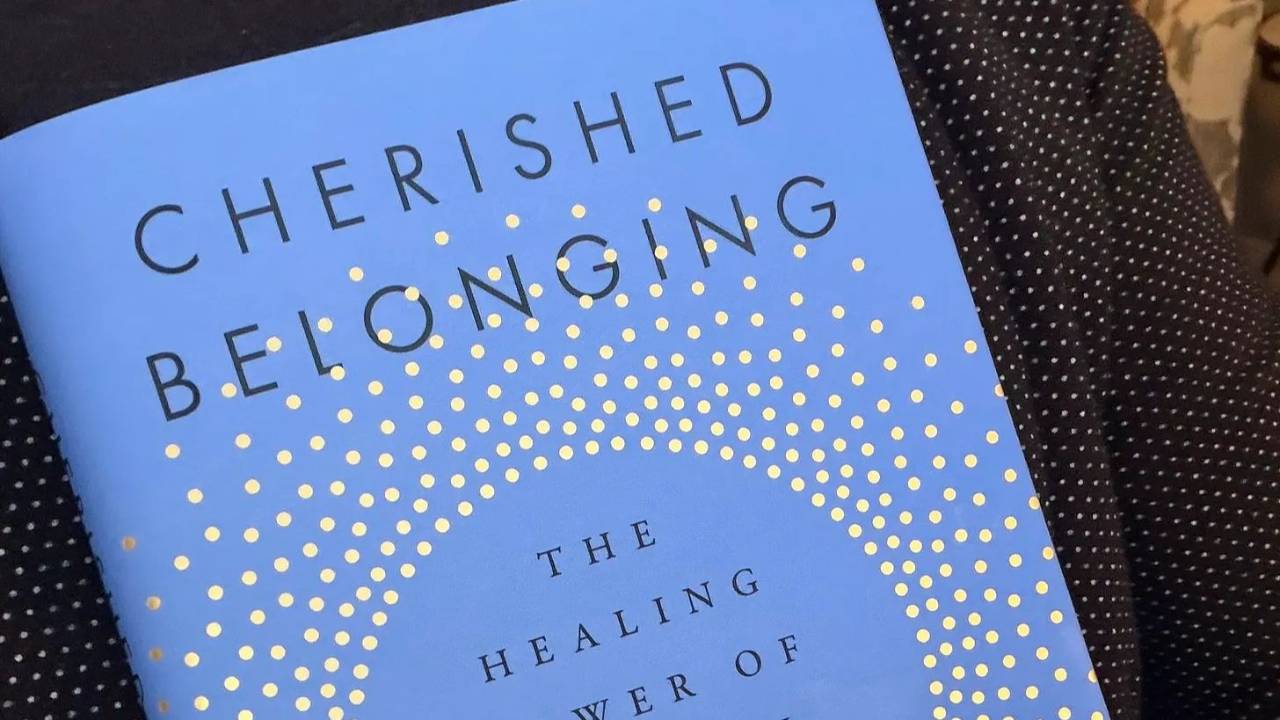
Nearly every day, someone says it out loud in a group coaching call, a private session, or a community gathering:
The world feels like it’s on fire.
It’s hard to argue. A friend fears her husband from South America isn’t safe. Nearby, neighbors don’t leave their homes for fear of being detained by ICE. The US President keeps finding new ways to shock and fracture. And yet, lately, I keep repeating the same phrase to myself, like a mantra or borrowed prayer:
We belong to one another.
I thought it as I drove past an abandoned building with ABOLISH ICE spray-painted in black across its face.
Yes! My heart answered immediately.
And then I thought: yes, abolish ICE… and we still belong to one another.
Systems can be dismantled without turning people into enemies.
I think of the two employees I recently helped navigate conflict. They are so similar in their goals, standards, and devotion to doing good work, yet they can’t see each other. Fear has them postured as opponents, guarding territory, defending their approach, and pushing back against perceived control.
They’ve forgotten, or maybe never recognized, that they’re on the same team.
We’re actually all on the same team.
It’s called human.
What would it be like if we could see that?
Then I hear about a young girl so wounded in her own home that she no longer wants to live. A child harming herself, desperate to escape pain and feel worthy of her life. She isn’t my daughter, but I care for her so deeply, wishing that we could form a communal village of mothers and fathers to hold her when her parents cannot. People willing to say, you belong, you matter, you are loved, even by strangers.
It would be so easy to point to her mother, who has neglected and verbally abused her. Or to her father, who is no longer in the picture. To place blame, to look with disgust, to shun them for what has been said or done. To say: this is where it went wrong.
But no healthy person harms their child.
No healthy person neglects, wounds, or withholds love from their child.
Her mother, too, needs a village. She, too, needs people willing to see her behavior as illness, and still hold her with tenderness, seeing her humanity. People who understand that neglect doesn’t appear out of nowhere, but as a result of neglected trauma.
We belong to one another.
There’s an African proverb that says:
“A child not embraced by its village will burn it down to feel its warmth.”
I wonder how much of what we’re witnessing—violence, polarization, blame, cruelty—is exactly that. A world on fire because too many people were never embraced.
I turn another page of Cherished Belonging by Gregory Boyle (commonly known as Father Greg), founder of Homeboy Industries, and feel the call to examine my
own emotional and spiritual health.
“We are all unshakably good,” he says, “without exception.”
It’s easy for me to sit with a coaching client and see their unshakable goodness, without exception.
But can I look at the world, including those who overpower, dehumanize, and inflict harm, and still believe that everyone is unshakably good?
It’s confronting. And challenging. I take a deep breath and exhale slowly, pausing quietly to sit with the question as a challenge. I’ve long believed that people do bad things, but that bad isn’t who they are.
Can I go deeper into myself, deeper into love, seeing every human as unshakably good?
I think I can.
Father Greg invites us to examine our long-held ways of categorizing people as being good or bad, and instead look at mentally healthy or deeply unwell from unhealed trauma.
No healthy person drags someone from a car.
No healthy person shoots a man holding a cellphone.
That’s not evil.
That’s illness.
I can see that. And seeing it takes me one step closer to viewing everyone as unshakably good.
Father Greg asks us to stop demonizing and instead see illness born from pain, suffering, and disconnection. When I look at the world through that lens, it changes. And the world inside me changes too. My emotions soften. My heart feels warmer. I feel more alive. More aligned.
“God is inclusion,” he writes, “and tenderness is the highest form of spiritual maturity.”
I exhale as I read those words.
If we exclude another, I believe we exclude a part of ourselves, like one branch of a tree telling another branch it doesn’t belong, forgetting that they’re part of the same living whole.
Our village needs warmth. Not from burning it down, but from knowing that we belong to one another. Where does it start? I believe it starts in our own hearts and minds.
You belong to you. Cherished belonging.
From there, we learn to notice where there is a thirst for tenderness and to respond to that thirst. We extend that tenderness into our homes and our communities, and we remember the comfort that comes from belonging.
I’ve imagined before that if I met Father Greg, I might just weep from the love he seems to carry in his presence. I wonder if he’s ever been called a coach, because that’s what he does by asking powerful questions. He invites us into deeper compassion, greater courage, and a more honest kind of love. A love, he says, that lifts us above the forces that keep us apart.
Our longing for a different world tells me we’re ready for this work.
In our own hearts.
In our families.
In our communities.
Because if we truly remembered that we belong to one another, I believe we’d find warmth and comfort from a different source.
One rooted in unshakable goodness and belonging.
I write regularly about aliveness, fear, and the inner choices that shape our lives. Get the next one in your inbox.